
Warehouse Layout: Complete Guide to Design and Types
The warehouse layout (warehouse layout design), i.e., the physical arrangement of areas and structures within it, is crucial to ensure an efficient flow of goods, optimize space, and reduce operational costs. The type of layout chosen depends on the specific operational needs of the warehouse, the type of goods handled, the available equipment, and the number of orders to be fulfilled.
Here are the main types of warehouse layouts that a warehouse can adopt:
Longitudinal Aisle Layout
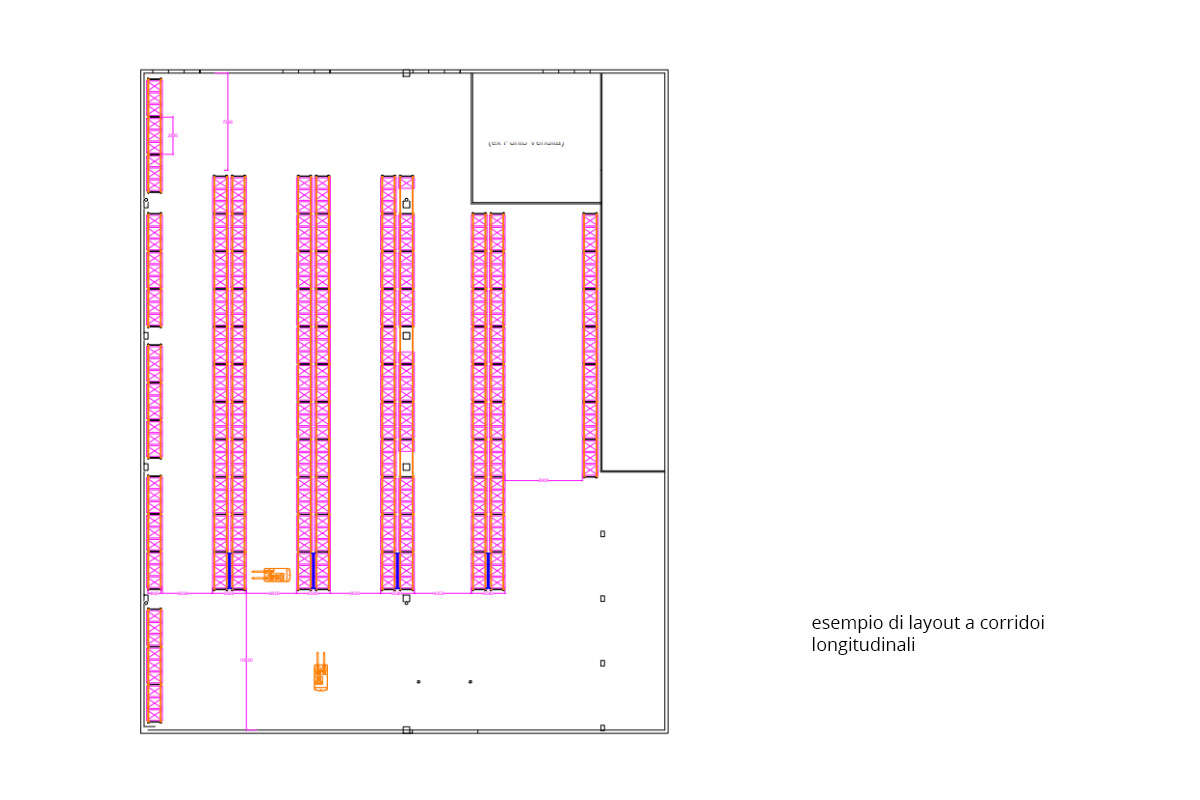
This is the most common layout; in this layout, the shelving is arranged parallel to each other, forming straight aisles. Each aisle is separated by a passageway for forklifts or operators.
Characteristics:
- Linear and simple flow
- Direct access to all shelves
- Easy to manage for picking and replenishment
- Used in traditional warehouses or with manual picking.
Advantages:
- Maximizes available storage space
- Simple to organize and optimize.
Disadvantages:
- Potential congestion in the aisles
- Greater need for movement to reach distant items.
Block Layout (Bloc Storage)
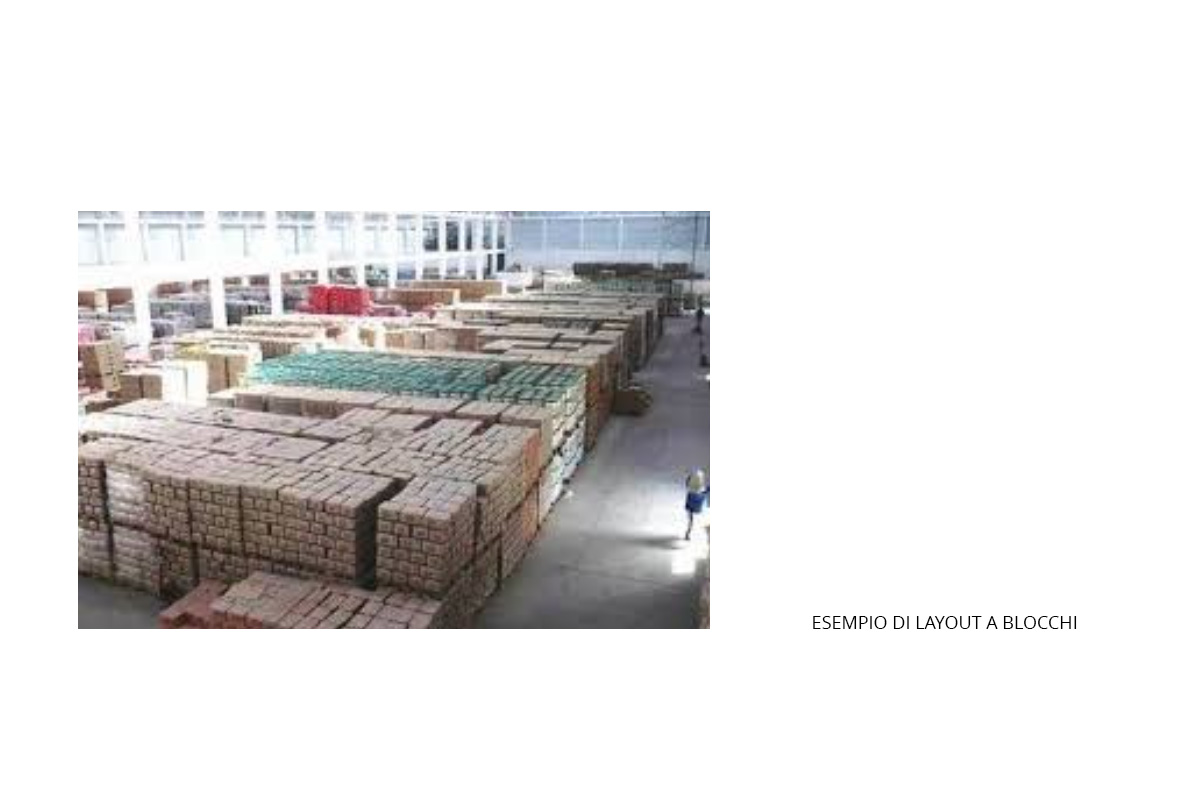
This layout involves stacking products directly on the floor, without fixed shelving. It is suitable for goods stored on pallets that do not require frequent access. The maximum number of stackable pallets depends on their stability conditions: the stack must always be safe and stable; it is good practice to overlap the pallets of the upper levels by placing them “straddling” two or more pallets below.
Characteristics:
- Block or pile storage
- Used for very low turnover items or for high turnover codes with large quantities of stock
- Storage follows the FIFO (“First In, First Out”) or LIFO (“Last In, First Out”) principle, depending on the organization.
Advantages:
- Optimizes the use of floor space
- Virtually no costs (no fixed structures).
Disadvantages:
- Limited access to items at the bottom or back of the block
- Potential inefficiency in picking
- Risk to the safety of operators and goods.
Zoning Layout
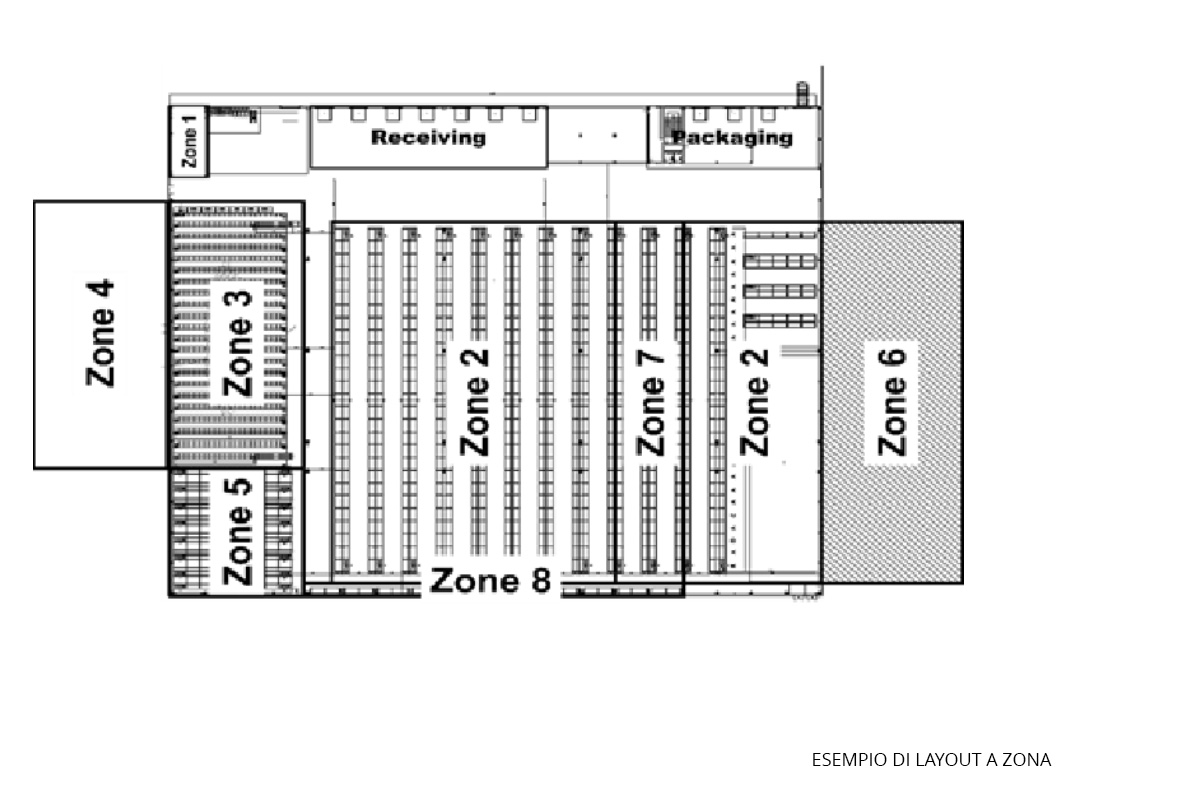
The warehouse is divided into different zones, each hosting a specific type of product or activity. Each zone can have a different configuration or layout based on its function.
Characteristics:
- Separate areas for storage, picking, packing, shipping, and receiving.
- Each zone can be optimized for a specific process (e.g., ground zone for receiving, shelving for picking, cross-docking areas for rapid transit).
Advantages:
- Greater control and specialization of operations
- Reduced risk of confusion between different types of goods
- Ideal for warehouses with a variety of products and different processes.
Disadvantages:
- Requires careful management of the flow between different zones
- Possible increase in distance traveled between areas
- Division of operators into different zones and activities, risk of reduced operational flexibility.
“I” Layout
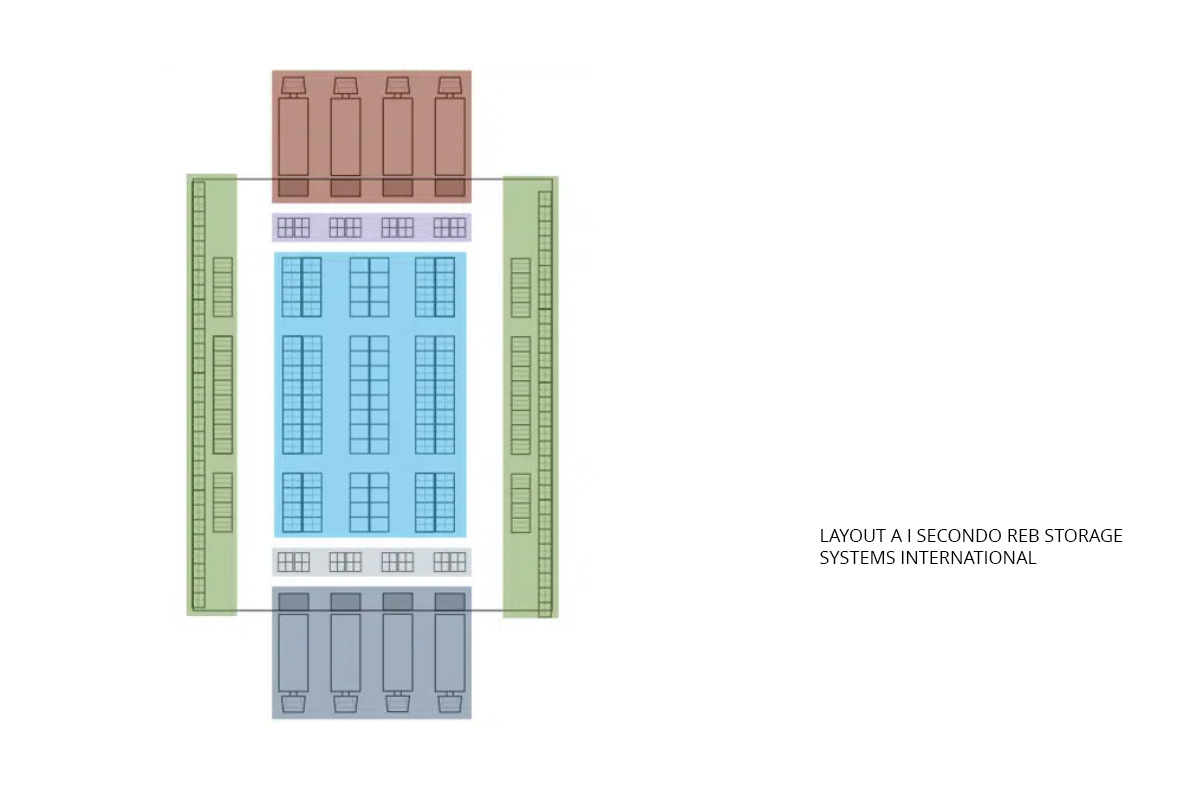
In an “I” layout, receiving and shipping operations occur at opposite ends of the warehouse, with other work and storage zones in between.
Characteristics:
- The receiving and shipping areas are positioned on opposite sides of the warehouse, usually on the short sides
- Goods pass through the entire warehouse from the receiving point to the shipping point
Advantages:
- Perfect for high-turnover warehouses or rapid transit operations
- Minimizes interference between receiving and shipping operations.
- Facilitates control of the flow of goods.
Disadvantages:
- Limited to certain types of warehouses
- Requires a large horizontal surface
- Not always efficient for picking, distances can be significant
- Does not favor cross-docking activity: a small shipping area is often created near the receiving area to facilitate this process.
“U” Layout
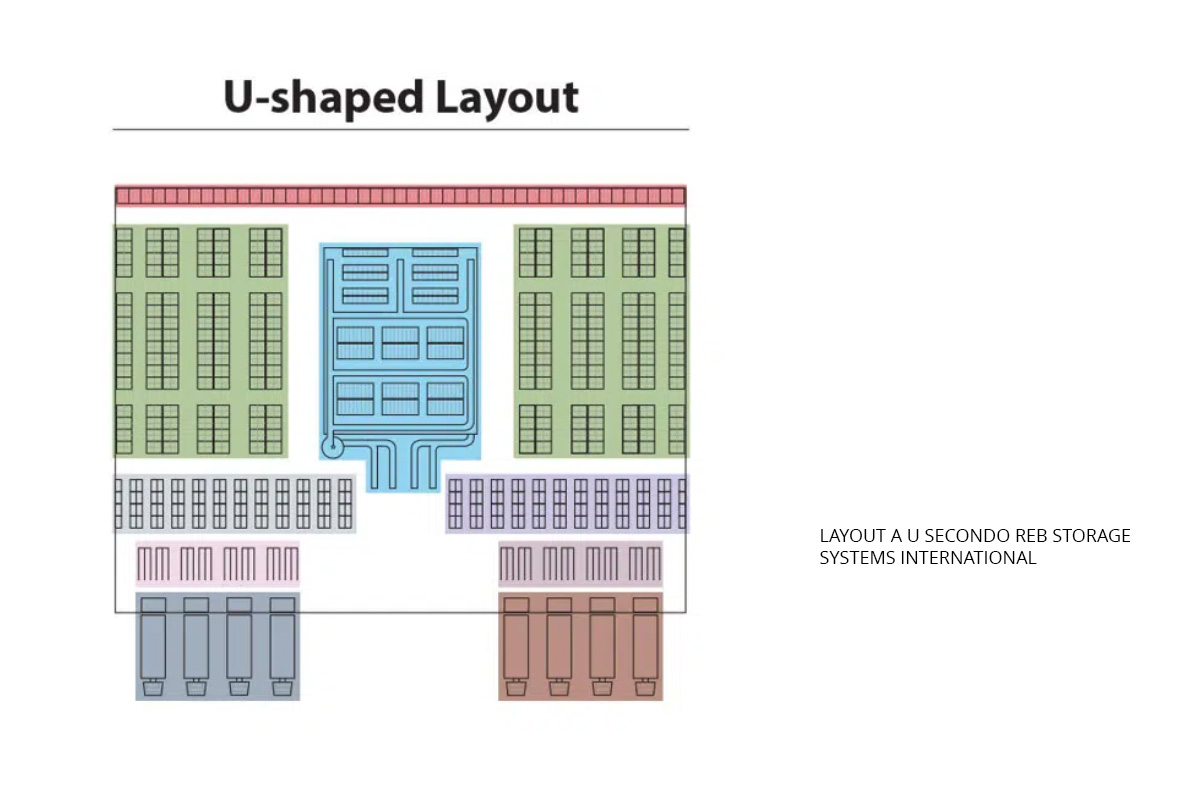
The “U” layout is very common in modern warehouses, where receiving and shipping operations occur at opposite ends of the same area, with the storage zone in the middle.
Characteristics:
- The receiving and shipping areas are positioned on the short sides of the “U”
- The flow of goods follows a linear path through the storage
- Used to maximize handling efficiency and minimize distances traveled.
Advantages:
- Reduces handling time between receiving, storage, and shipping
- Facilitates control of the flow of goods.
Disadvantages:
- Limited to certain types of warehouses
- May not be suitable for very large or multi-section warehouses.
“L” Layout
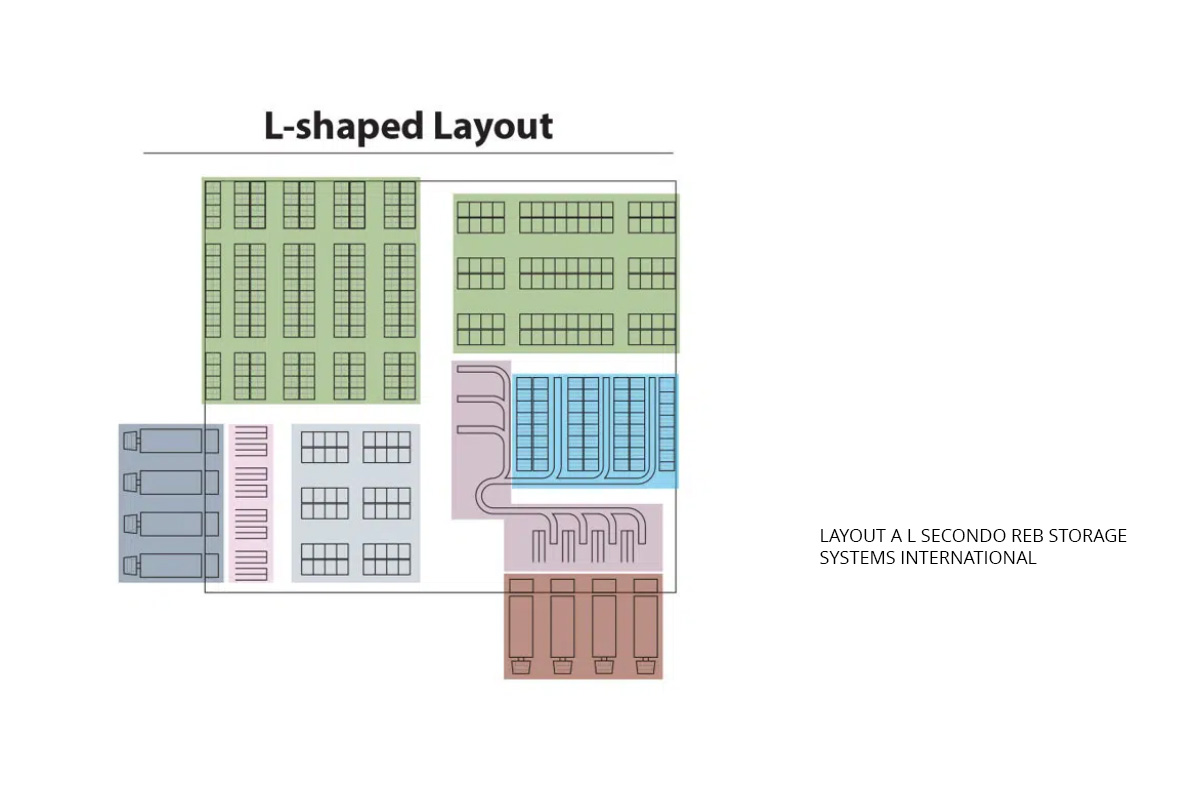
Similar to the U layout, but with the receiving and shipping areas located on two adjacent sides of the warehouse, also creating a continuous and linear flow of goods.
Characteristics:
- Receiving occurs on one side, while shipping on an adjacent side
- Goods pass through the entire warehouse from the receiving point to the shipping point
- Great for cross-docking operations, where goods transit quickly without being stored.
Advantages:
- Perfect for high-turnover warehouses or rapid transit operations
- Reduces interference between receiving and shipping operations.
Disadvantages:
- The warehouse area near the two receiving and shipping areas risks being congested during peak periods
- Not always efficient for picking.
Automated Warehouse Layout
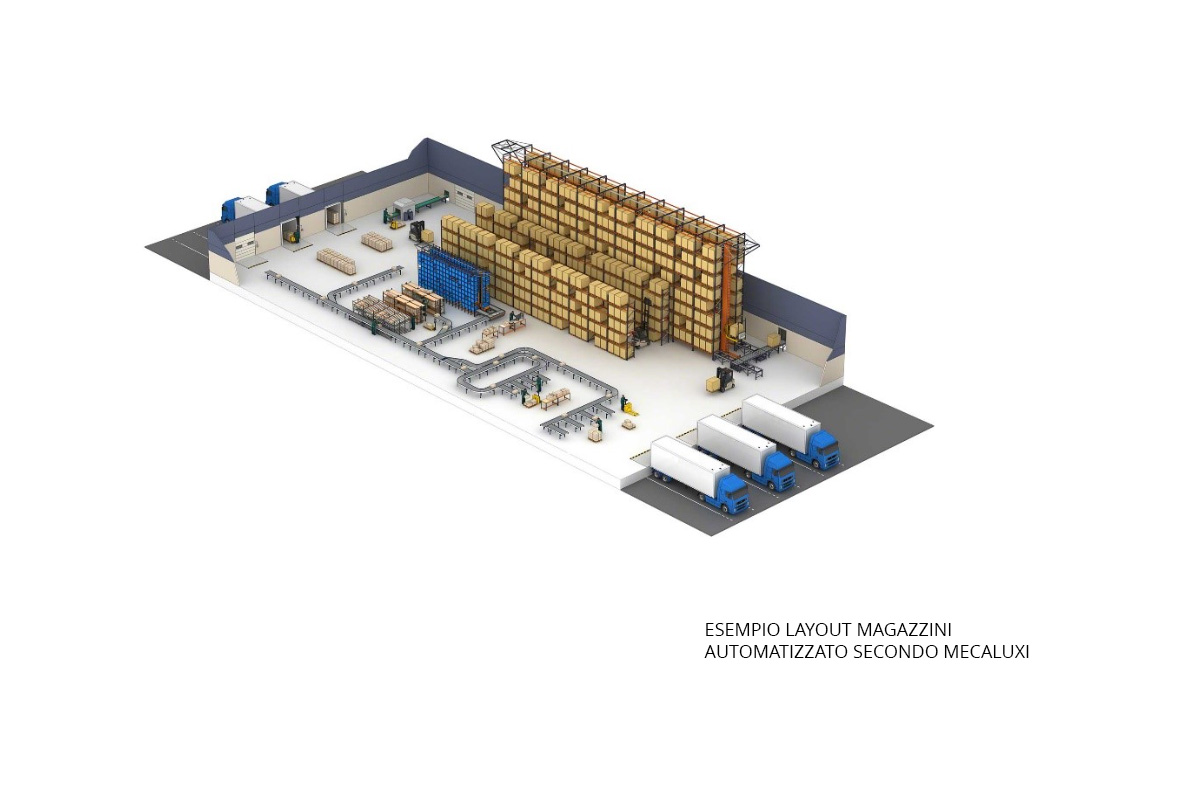
These warehouses feature a layout optimized for automated storage and retrieval systems. They are highly technological, with robots and shuttles automatically moving goods.
Characteristics:
- Spaces optimized for handling via AGV, AMR, or robots
- Presence of rail, conveyor, or track transport systems
- Use of vertical and horizontal systems to maximize space
- Automation of picking and storage.
Advantages:
- Maximum efficiency and reduction of operational times
- Reduction of human error risk.
Disadvantages:
- High installation and maintenance costs
- Longer and more complex design
- Total dependence on technology.
Final Considerations
The choice and design of the warehouse layout depend on various factors, such as the type of products, the flow of goods, the volume of orders, and the type of technology used. The correct configuration can improve operational efficiency, reduce processing times, and optimize available space.

Articoli Correlati



Warehouse Layout: Complete Guide to Design and Types
The warehouse layout (warehouse layout design), i.e., the physical arrangement of areas and structures within it, is crucial to ensure an efficient flow of goods, optimize space, and reduce operational costs. The type of layout chosen depends on the specific operational needs of the warehouse, the type of goods handled, the available equipment, and the number of orders to be fulfilled.
Here are the main types of warehouse layouts that a warehouse can adopt:
Longitudinal Aisle Layout
This is the most common layout; in this layout, the shelving is arranged parallel to each other, forming straight aisles. Each aisle is separated by a passageway for forklifts or operators.
Characteristics:
- Linear and simple flow
- Direct access to all shelves
- Easy to manage for picking and replenishment
- Used in traditional warehouses or with manual picking.
Advantages:
- Maximizes available storage space
- Simple to organize and optimize.
Disadvantages:
- Potential congestion in the aisles
- Greater need for movement to reach distant items.
Block Layout (Bloc Storage)
This layout involves stacking products directly on the floor, without fixed shelving. It is suitable for goods stored on pallets that do not require frequent access. The maximum number of stackable pallets depends on their stability conditions: the stack must always be safe and stable; it is good practice to overlap the pallets of the upper levels by placing them “straddling” two or more pallets below.
Characteristics:
- Block or pile storage
- Used for very low turnover items or for high turnover codes with large quantities of stock
- Storage follows the FIFO (“First In, First Out”) or LIFO (“Last In, First Out”) principle, depending on the organization.
Advantages:
- Optimizes the use of floor space
- Virtually no costs (no fixed structures).
Disadvantages:
- Limited access to items at the bottom or back of the block
- Potential inefficiency in picking
- Risk to the safety of operators and goods.
Zoning Layout
The warehouse is divided into different zones, each hosting a specific type of product or activity. Each zone can have a different configuration or layout based on its function.
Characteristics:
- Separate areas for storage, picking, packing, shipping, and receiving.
- Each zone can be optimized for a specific process (e.g., ground zone for receiving, shelving for picking, cross-docking areas for rapid transit).
Advantages:
- Greater control and specialization of operations
- Reduced risk of confusion between different types of goods
- Ideal for warehouses with a variety of products and different processes.
Disadvantages:
- Requires careful management of the flow between different zones
- Possible increase in distance traveled between areas
- Division of operators into different zones and activities, risk of reduced operational flexibility.
“I” Layout
In an “I” layout, receiving and shipping operations occur at opposite ends of the warehouse, with other work and storage zones in between.
Characteristics:
- The receiving and shipping areas are positioned on opposite sides of the warehouse, usually on the short sides
- Goods pass through the entire warehouse from the receiving point to the shipping point
Advantages:
- Perfect for high-turnover warehouses or rapid transit operations
- Minimizes interference between receiving and shipping operations.
- Facilitates control of the flow of goods.
Disadvantages:
- Limited to certain types of warehouses
- Requires a large horizontal surface
- Not always efficient for picking, distances can be significant
- Does not favor cross-docking activity: a small shipping area is often created near the receiving area to facilitate this process.
“U” Layout
The “U” layout is very common in modern warehouses, where receiving and shipping operations occur at opposite ends of the same area, with the storage zone in the middle.
Characteristics:
- The receiving and shipping areas are positioned on the short sides of the “U”
- The flow of goods follows a linear path through the storage
- Used to maximize handling efficiency and minimize distances traveled.
Advantages:
- Reduces handling time between receiving, storage, and shipping
- Facilitates control of the flow of goods.
Disadvantages:
- Limited to certain types of warehouses
- May not be suitable for very large or multi-section warehouses.
“L” Layout
Similar to the U layout, but with the receiving and shipping areas located on two adjacent sides of the warehouse, also creating a continuous and linear flow of goods.
Characteristics:
- Receiving occurs on one side, while shipping on an adjacent side
- Goods pass through the entire warehouse from the receiving point to the shipping point
- Great for cross-docking operations, where goods transit quickly without being stored.
Advantages:
- Perfect for high-turnover warehouses or rapid transit operations
- Reduces interference between receiving and shipping operations.
Disadvantages:
- The warehouse area near the two receiving and shipping areas risks being congested during peak periods
- Not always efficient for picking.
Automated Warehouse Layout
These warehouses feature a layout optimized for automated storage and retrieval systems. They are highly technological, with robots and shuttles automatically moving goods.
Characteristics:
- Spaces optimized for handling via AGV, AMR, or robots
- Presence of rail, conveyor, or track transport systems
- Use of vertical and horizontal systems to maximize space
- Automation of picking and storage.
Advantages:
- Maximum efficiency and reduction of operational times
- Reduction of human error risk.
Disadvantages:
- High installation and maintenance costs
- Longer and more complex design
- Total dependence on technology.
Final Considerations
The choice and design of the warehouse layout depend on various factors, such as the type of products, the flow of goods, the volume of orders, and the type of technology used. The correct configuration can improve operational efficiency, reduce processing times, and optimize available space.