The role of the warehouse in the supply chain: why it is essential for integrated logistics
The role of the warehouse in the supply chain is central and strategic. The warehouse is indeed the core of
What is integrated logistics?
According to the Italian Logistics Association (AILOG), it encompasses all organizational, managerial, and strategic activities that regulate the flow of materials and information from suppliers to customers, including after-sales service.
The Council of Logistic Management (CLM USA) defines logistics as the efficient and economical planning, implementation, and control of the flow and storage of raw materials, semi-finished and finished products, from the point of origin to the point of consumption, to best meet customer needs.
In summary, integrated logistics covers the entire operational chain, from producer to consumer, including transportation, inventory optimization, storage, order management, and customer service. It is not only about ensuring precision and speed in operations but also about optimizing costs and resources throughout the chain.
What is the supply chain?
According to Mentzer (2001), supply chain management involves the systematic and strategic coordination of internal business functions and all activities along the chain, aimed at improving overall long-term performance. The supply chain thus represents the complete integration of business processes, from the final consumer to suppliers, creating added value for every involved party. It is no coincidence that the supply chain is often also referred to as the “value chain.”
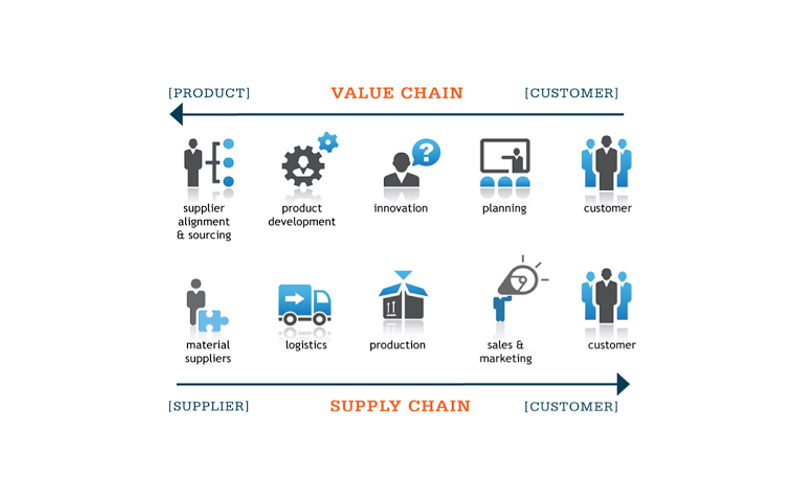
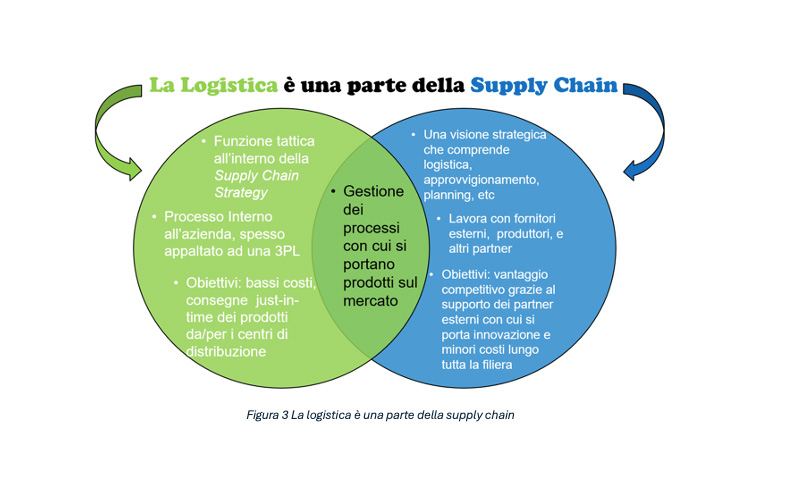
Logistics, therefore, constitutes an essential element of the supply chain, which combines operational integration among participating companies with the ability to generate added value through strategic management of available resources and technologies.
Why does the warehouse have a strategic role in the supply chain?
The role of the warehouse in the supply chain is fundamental, as it ensures the organization and security of goods through key activities:
-
Goods storage: provides a strategic reserve of products to promptly respond to demand fluctuations and customer requests.
-
Order consolidation: optimizes shipping efficiency by aggregating products from different suppliers or production departments, thereby reducing transportation costs.
-
Inventory optimization: allows for accurate management of available stocks, avoiding overstock and stockouts that could generate costs and economic losses.
-
Picking and distribution: through the picking activity, the warehouse correctly selects goods destined for customer orders, ensuring precise, timely, and quantity-compliant shipments.
In conclusion, the role of the warehouse in the supply chain is central to achieving efficiency, optimizing costs, and providing superior quality service, thus transforming integrated logistics into a true competitive advantage for the company.

Articoli Correlati
The role of the warehouse in the supply chain: why it is essential for integrated logistics
The role of the warehouse in the supply chain is central and strategic. The warehouse is indeed the core of
What is integrated logistics?
According to the Italian Logistics Association (AILOG), it encompasses all organizational, managerial, and strategic activities that regulate the flow of materials and information from suppliers to customers, including after-sales service.
The Council of Logistic Management (CLM USA) defines logistics as the efficient and economical planning, implementation, and control of the flow and storage of raw materials, semi-finished and finished products, from the point of origin to the point of consumption, to best meet customer needs.
In summary, integrated logistics covers the entire operational chain, from producer to consumer, including transportation, inventory optimization, storage, order management, and customer service. It is not only about ensuring precision and speed in operations but also about optimizing costs and resources throughout the chain.
What is the supply chain?
According to Mentzer (2001), supply chain management involves the systematic and strategic coordination of internal business functions and all activities along the chain, aimed at improving overall long-term performance. The supply chain thus represents the complete integration of business processes, from the final consumer to suppliers, creating added value for every involved party. It is no coincidence that the supply chain is often also referred to as the “value chain.”
Logistics, therefore, constitutes an essential element of the supply chain, which combines operational integration among participating companies with the ability to generate added value through strategic management of available resources and technologies.
Why does the warehouse have a strategic role in the supply chain?
The role of the warehouse in the supply chain is fundamental, as it ensures the organization and security of goods through key activities:
-
Goods storage: provides a strategic reserve of products to promptly respond to demand fluctuations and customer requests.
-
Order consolidation: optimizes shipping efficiency by aggregating products from different suppliers or production departments, thereby reducing transportation costs.
-
Inventory optimization: allows for accurate management of available stocks, avoiding overstock and stockouts that could generate costs and economic losses.
-
Picking and distribution: through the picking activity, the warehouse correctly selects goods destined for customer orders, ensuring precise, timely, and quantity-compliant shipments.
In conclusion, the role of the warehouse in the supply chain is central to achieving efficiency, optimizing costs, and providing superior quality service, thus transforming integrated logistics into a true competitive advantage for the company.