Types of Warehouses
Warehouses can be of various types and take on different forms, depending on their functions, the logistics processes they need to perform, and the products they need to manage. Here are the main characteristics and types of warehouses a warehouse can have:
Traditional Warehouse
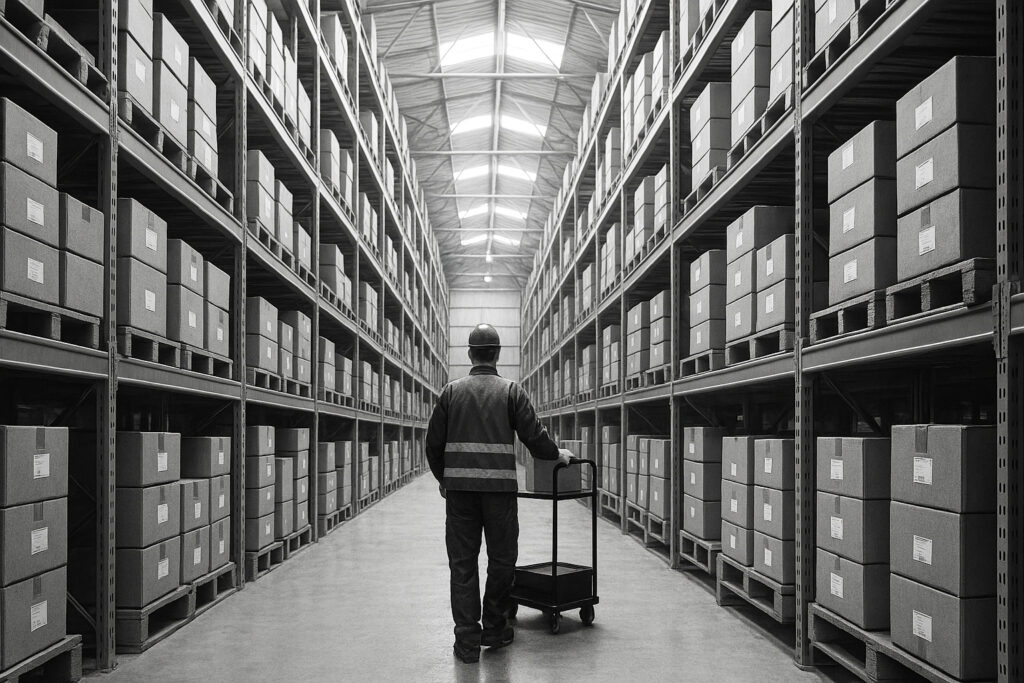
The most commonly used shape is obviously rectangular or square, but it often needs to adapt to the shape of the buildable land or the presence of nearby buildings.
These warehouses are often designed for handling goods through shelving arranged in parallel aisles, optimizing space for the movement of goods. Often, the height does not exceed 10-12 meters.
Characteristics:
- Simple structure, with ample space for forklift movement;
- Loading and unloading doors along the sides;
- Large storage areas with fixed shelves;
- Suitable for manual or semi-automated product management.
Mezzanine Warehouses
A frequently used variant involves the use of Mezzanine Warehouses, which feature multiple levels of storage and work.
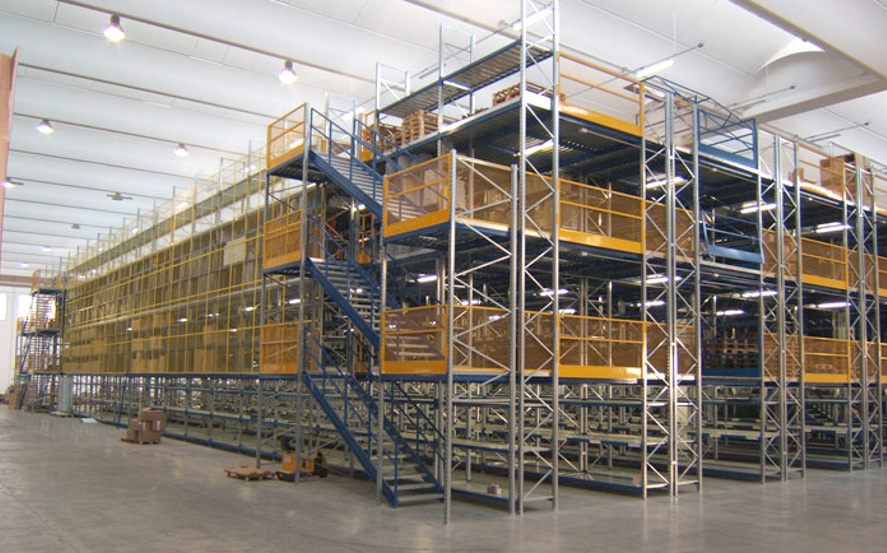
A warehouse with multiple floors is used to make the most of vertical space. This type of warehouse is suitable when you want to increase storage capacity without expanding the ground area.
Characteristics:
- Mezzanines that create different storage levels;
- Access to floors via stairs or freight elevators;
- Suitable for light or small products;
- Ideal for small companies looking to optimize limited spaces.
Automated Vertical Warehouses
When intensive storage is required, Automated Vertical Warehouses (High-Bay Warehouse) can be used.
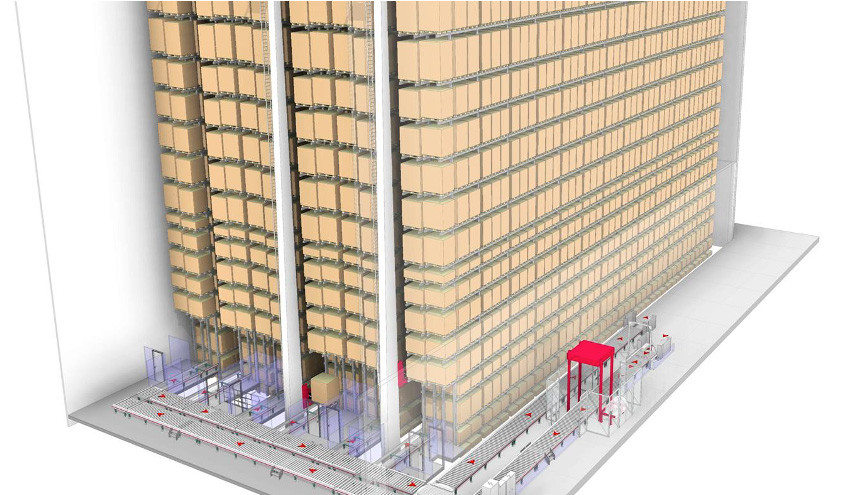
The building can be very tall (up to 40 meters or more), and generally, the shape is narrow and rectangular.
These automated warehouses utilize vertical space to store products. They are equipped with automated shelving systems and shuttles (robots) that manage picking and storage operations.
Characteristics:
- Fully automated with cranes, shuttles, or robots.
- Minimal space for personnel.
- Very high storage capacity relative to ground area.
- Used in sectors with high order volumes such as e-commerce or the pharmaceutical industry.
Low-Cost Warehouse (Prefabricated or Canopy)
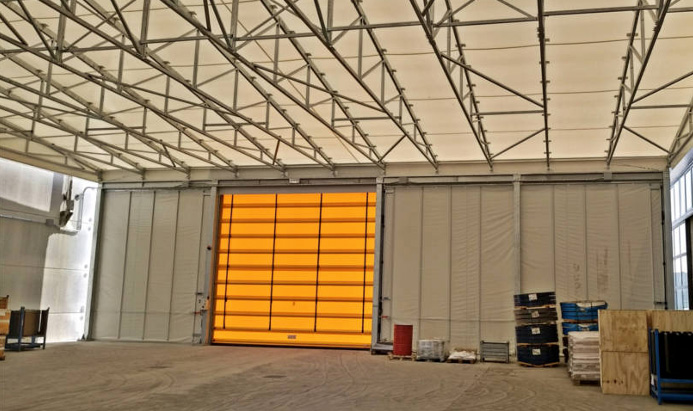
A good temporary warehouse can also be created with low-cost solutions, using simple prefabricated metal structures or canopies attached to one of the walls of the traditional warehouse; the shape is often rectangular, and the canopy can be open on the sides.
These are economical warehouses made with steel or prefabricated structures, often lacking insulation and advanced systems. Suitable for temporary storage or for materials that do not require specific climatic conditions. Their construction must be allowed by the current zoning plan, often, by demonstrating their temporariness, they do not contribute to increasing the overall volume of buildings; their presence and the goods intended for them must comply with current fire safety regulations.
Characteristics:
- Open or semi-covered structures
- Often used for temporary storage or bulky goods
- Reduced construction and maintenance costs
- Used for storing construction materials, agricultural equipment, or bulky goods.
Modular Warehouse
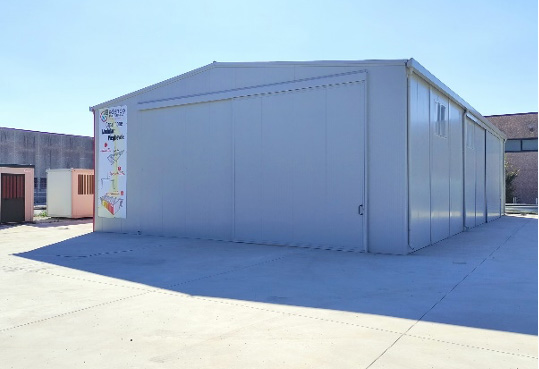
If the side walls cannot be utilized, or if an independent temporary warehouse is needed, then modular warehouses can be considered.
These types of warehouses are designed to grow and adapt to the company’s needs. Modular units can be added or removed based on demand, allowing great flexibility in space management.
Characteristics:
Characteristics:
- Modular structures that can be expanded
- Adaptable to different business needs
- Quick and flexible construction
- Suitable for temporary warehouses or expanding companies.
Refrigerated Warehouse (Cold Storage)
A variant of the traditional warehouse is the refrigerated warehouse: the shape is quite similar, but the walls and roof are thermally insulated, and of course, there is a refrigeration or freezing system that must maintain constant internal temperature and humidity conditions over time.
They often exploit the high density of Automated Vertical Warehouses, utilizing the high storage density and therefore a smaller volume of air to refrigerate (in proportion to the volume of goods stored).
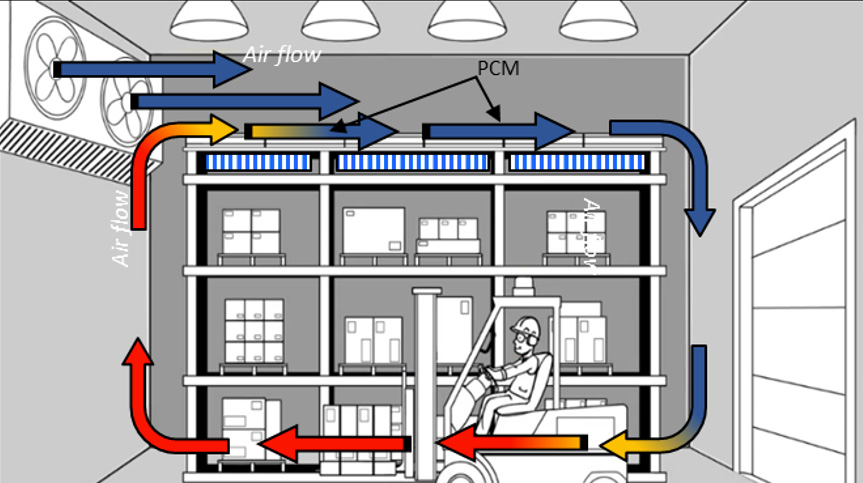
Characteristics:
- Temperature-controlled environment (cold or frozen)
- Advanced refrigeration systems
- Ideal for food and pharmaceutical industries
- Access equipped with systems to reduce thermal dispersion.
Cross-Docking Warehouse
These structures are designed to facilitate the rapid exchange of goods, with a receiving area and a shipping area. In this type of warehouse, goods are transferred directly from incoming to outgoing vehicles, minimizing storage time.
They are often in an “H” or “T” shape, with two main sections.
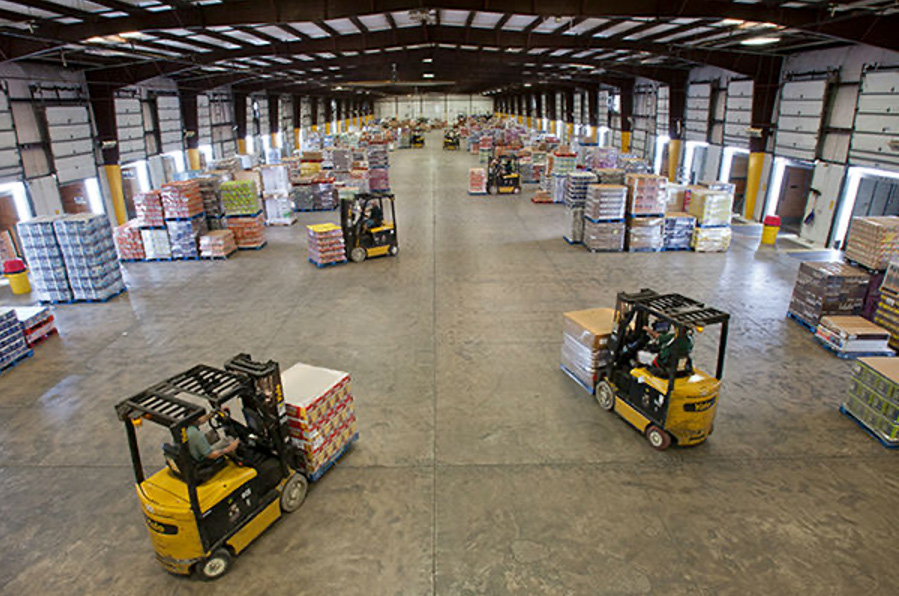
Characteristics:
- Large loading/unloading areas
- Reduced permanent storage space
- Used to quickly move goods between suppliers and customers
- Ideal for the logistics sector, e-commerce, and large distribution.
Advanced Warehouse (Smart Warehouse)
Warehouses equipped with cutting-edge technologies such as artificial intelligence systems, robots, drones, and complete automation for the control and management of goods are called “smart warehouses.”
The shape is similar to that of a traditional warehouse, but advanced technologies are present that allow complete control over the flow of goods, as well as the movement of handling equipment.
Intelligent robots may be present to handle all (or part) of the repetitive activities considered “non-value-added.”
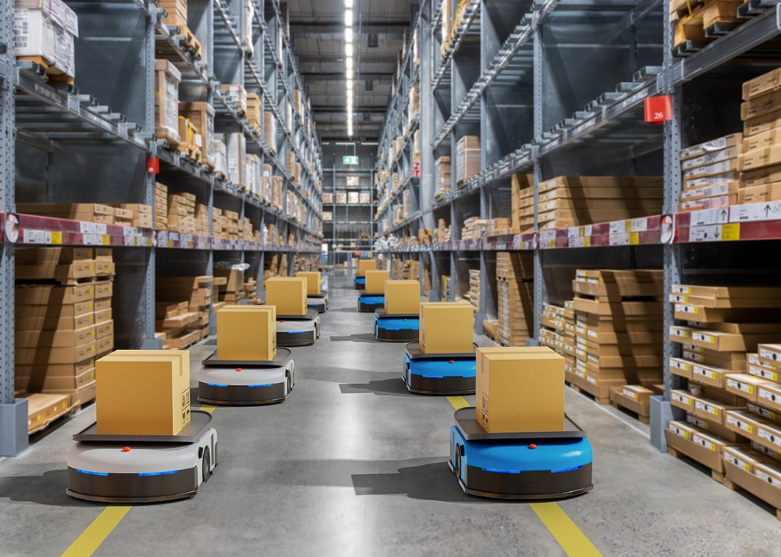
Characteristics:
- IoT sensors for real-time monitoring
- Complete or partial automation of picking and storage
- Integration with advanced management software (WMS, ERP)
- Ideal for large tech companies and high-level e-commerce businesses.
In summary, warehouse types can range from simple prefabricated buildings to automated and technologically advanced structures, depending on business needs and the characteristics of the goods to be managed. Each type is designed to optimize space, operational efficiency, and costs.

Articoli Correlati